MetStudios facilitates a B2B Python course in collaboration with Wooga
By metstudios
11 June 2026
Earlier this year MetStudios, as part of BIMM University, partnered with freelance creatives to deliver a bespoke Python training programme for the Games Economy teams at Wooga in Berlin. The B2B initiative was designed to help game designers expand their technical capabilities, equipping them with practical programming skills that could be applied directly to their day-to-day workflows.
The course Python Programming: Foundations to Applications introduced participants to the fundamentals of Python and its real-world applications across game development, automation, machine learning (ML), and data science. Tailored specifically for Wooga’s Games Economy team, the programme focused on giving designers the tools and confidence to integrate technical problem-solving into their practice.
Totalling 25 hours across multiple sessions, participants were instructed in a variety of topics, including:
- Python Basics & Tools – Covering Python syntax, running code, and use of development tools like IDEs, command line tools, iPython, and Jupyter Notebook.
- Core Data Types & File Handling – Working with numbers, strings, lists, dictionaries, sets, and managing files, directories, CSVs, Word, and Excel documents.
- Programming Concepts – Creating functions, classes, modules, and packages while exploring object-oriented and functional programming concepts.
- Error Handling & Testing – Handling exceptions, writing tests, checking code coverage, and using regular expressions for text processing.
- Data Analysis & Visualisation – Importing and cleaning datasets, working with data frames, analysing and summarising data, generating reports, and creating visualisations.
Is Python becoming essential for modern game economy teams?
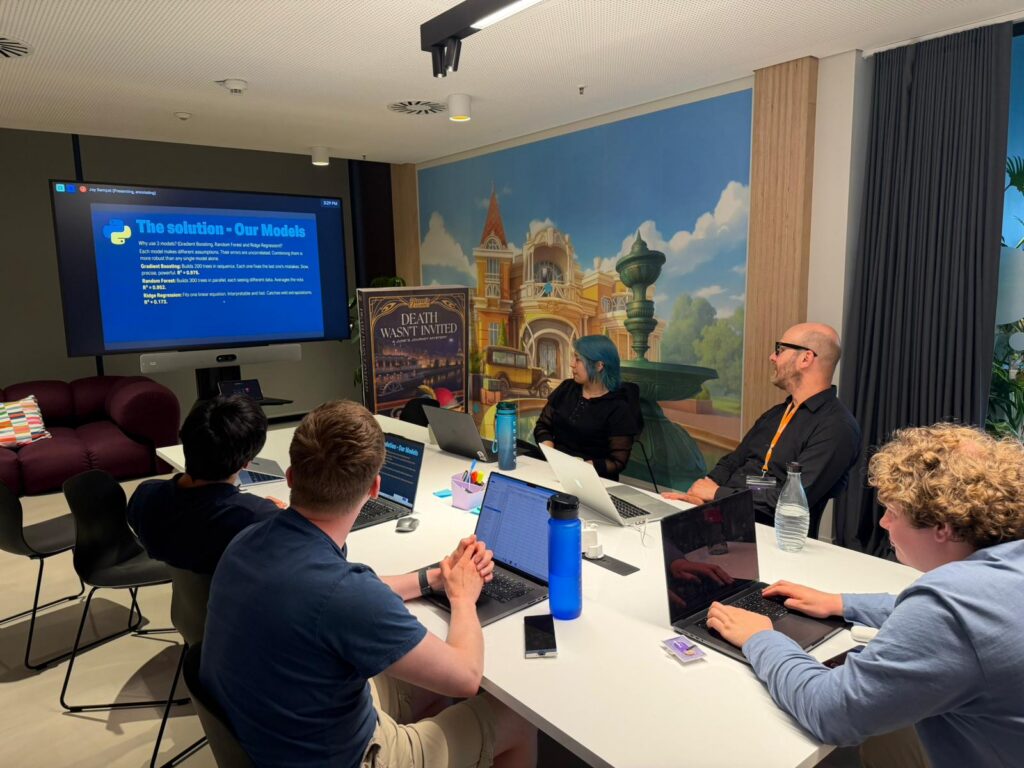
As explained by Wooga’s Senior Game Economy Designer Mona Moghadam, Game Economy teams primarily work with numbers, designing and managing the balance between organic player progression and the monetised game elements that provide long-term revenue streams for the game studio. These teams work with systems, making models for the in-game economy and running simulations to identify playing habits to further inform their design choices.
“The market is more competitive nowadays. We need to dig into data and find ways to improve the player experience through personalisation,” Mona explained.
“Most of the time, when we created data sheets, they were static. But with AI becoming more prominent, its implementation allows us to create more Python simulations,” she added.
As other game studios increasingly integrate AI into different areas of development and machine learning, Wooga has focused on using AI to give its game economy teams deeper insight into the technology. The tools adopted alongside these initiatives have also helped broaden and diversify employees’ skillsets.
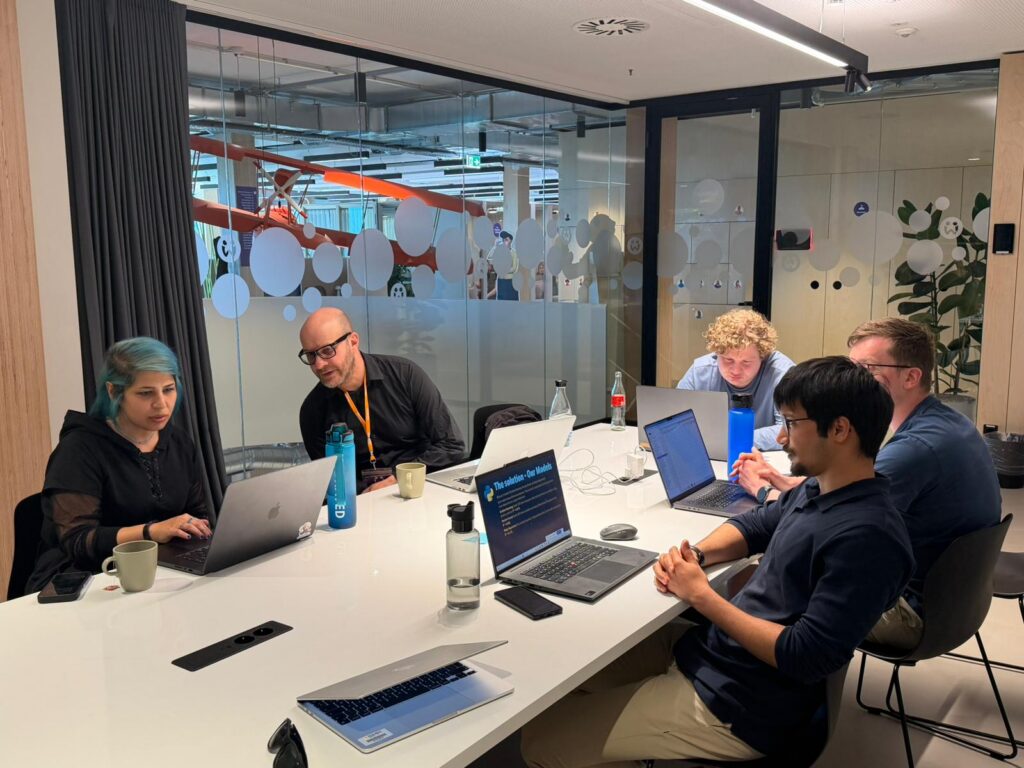
“We wanted to be more versatile, and sometimes we need to work with analysts and data scientists, so learning Python to this degree will help us work more efficiently” – Evgeni Karin, Game Economy Designer at Wooga.
Leading the course was Dr Fabrizio Augusto Poltronier, a regular collaborator of MetStudios, who concluded the final session by stating that “the most important thing is to understand the logic behind the system (Python), to leverage the knowledge, and to make hotfixes that would be quicker than going through data science teams. Knowing Python helps us have a better understanding of the model, and further streamlines the workflow”.
Are you interested in becoming a game designer?
Discover more about our BA (Hons) Games Design and Development degree here.
Sign up for one of our Open Days or apply via UCAS.