Essential games for aspiring video game students
By MetStudios
26 July 2026
Most people who want to make games start by jumping into a tutorial. That’s not a bad instinct, but it skips a step. The best designers don’t just know how to build games. They know how games work: why they feel the way they do, what the rules are actually doing, and how a tiny design decision can completely change a player’s experience.
That kind of thinking isn’t taught by watching someone else build. It comes from playing with intention – then getting into an engine and testing what you’ve learned. At MetStudios, that’s exactly how we work. You’re not sat in a lecture theatre memorising theory. You’re in Unity or Unreal Engine, making decisions, breaking things, and figuring out why they broke.
Introduction to Essential Games
Every game on this list was chosen for one reason: it teaches you something about how games work. Not how they look, not how they sell, but how they function as game design, and why those decisions create the experiences they do.
Whist
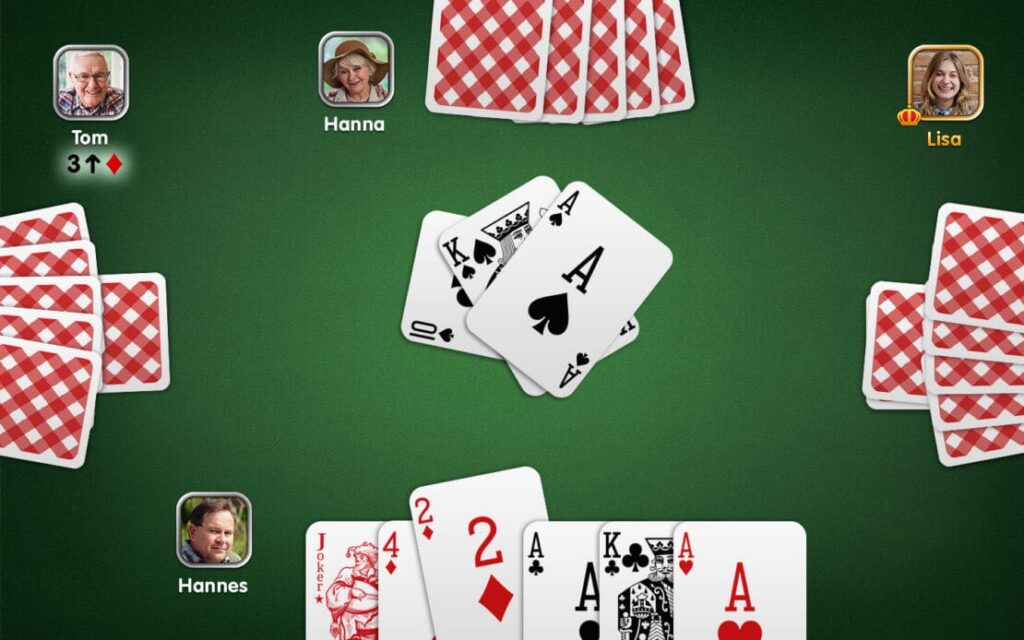
Don’t skip this game just because it’s old. Whist is one of the purest systems-thinking exercises you can do before touching a controller. With no scoring variations and a restricted hand, every decision is about reading your opponents and managing incomplete information, which is the same challenge you’ll face when designing multiplayer mechanics, enemy AI, or any game where the player never has the full picture.
Try this: Strip the game back to its rules on paper. Can you explain exactly what makes it tense? Now ask yourself how you’d recreate that tension in a digital prototype.
Bridge
Bridge layers communication, partnership, and probability on top of what Whist teaches. Two players coordinate through a formal bidding language they’re not allowed to break and that constraint becomes the game. It’s a masterclass in how social dynamics turn into mechanics, and it’s more relevant to multiplayer design than most people expect.
Try this: Play a hand, then redesign the bidding system. What happens if you remove one rule? Does the game get better or worse and why?
Magic: The Gathering (MTG)
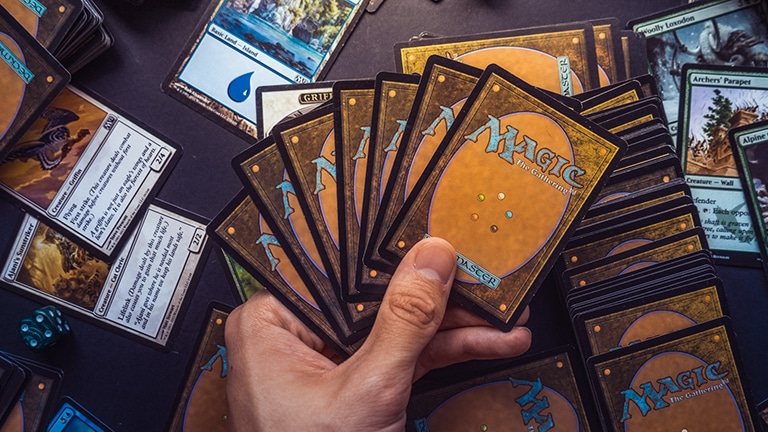
Magic: The Gathering has been running for over 30 years, releasing hundreds of cards at a time, across dozens of distinct worlds, without ever breaking its own rules. That’s not luck. It’s one of the most disciplined feats of systemic design in the history of games, and it’s worth pulling apart for exactly that reason.
Every card has to be precise enough that no two players can read it differently, flexible enough to interact with thousands of other cards, and balanced enough that the whole system doesn’t collapse. That’s a rules problem, a balance problem, and a world-building problem all at once.
Blades in the Dark
Blades in the Dark is a tabletop role-playing game by John Harper that completely rethinks how consequence works. Where most RPGs ask will you succeed?, Blades asks how badly do things go, and what do you do about it? The flashback mechanic lets players retroactively plan actions they’ve already taken. It’s an elegant solution to a real design problem, and it’s the kind of thinking you’ll be doing every day in a studio.
Try this: Read the flashback and position rules carefully. What problem were they built to solve? Could you implement a version of this system?
Hades
Hades is probably the best example of narrative-driven rogue-like design made to date. The writing advances when you die. Relationships deepen on repeated runs. The gameplay loop and the story loop are the same loop – and that’s not an accident. It’s a structural decision made at the very start of production. Study how it delivers character through mechanical interaction, not cutscenes, and ask yourself why that matters.
Try this: Pick one run and track every piece of story information you receive. How many of those moments were triggered by gameplay events rather than scripted sequences?
Slay the Spire
Slay the Spire is worth playing because it does something most card games can’t: it uses the digital format to make things happen that would be impossible at a physical table. Cards that copy themselves mid-turn, effects that trigger across multiple rounds, visual feedback that tracks dozens of moving parts at once – none of it would work on cardboard. It’s a game that knows exactly what it is and designs around its format rather than against it.
Try this: Pick five cards from Slay the Spire and figure out which ones couldn’t exist in a physical card game. What design decisions made them possible?
Tetris
Despite its simplicity, Tetris is deemed to be a perfect expression of a puzzle game. The difficulty curve is implicit: the game never tells you it’s getting harder, it just gets harder, because the shape of the mechanics demands it. The game has no story, no characters, it is just a system so well balanced that it has survived essentially unchanged for over 40 years
Super Metroid
Super Metroid defined a genre. The Metroidvania template of explore, get blocked, gain a new ability, double back, go further – is everywhere in modern game design, and it starts here. What makes Super Metroid remarkable isn’t the template itself but how it teaches without ever explaining. The game shows you a door you can’t open, makes you remember it, and trusts you to return when you’re ready. Its influence on modern games, showing valuable lessons in level design, exploration and player agency should be commended.
Journey
Journey is recommended for its minimalist design and emotional impact, praised for its elegant multiplayer solutions and ability to deliver a profound experience stripped down to core mechanics. The game has no dialogue. no UI and no explanation. You play as a figure in a desert, a mountain in the distance, and a set of mechanics so stripped back that everything you feel comes directly from the design. It’s a game that trusts the player completely.
Resident Evil 4
Resident Evil 4 has relentless player engagement and pacing, balancing intense action sequences with quieter moments seamlessly, akin to The Last of Us and Half-Life.
No Man’s Sky
No Man’s Sky is a game about scale – and what scale does to a player. The universe is procedurally generated and effectively endless, but the experience it creates isn’t about spectacle. It’s about quiet. Discovery. The particular feeling of landing on a planet no one else has named and finding something you weren’t expecting. The fact it’s developers, Hello Games, have completely re-engineered the game through dozens of major free updates since it came out 10 years ago is another incredible achievement.
Batman: Arkham Asylum
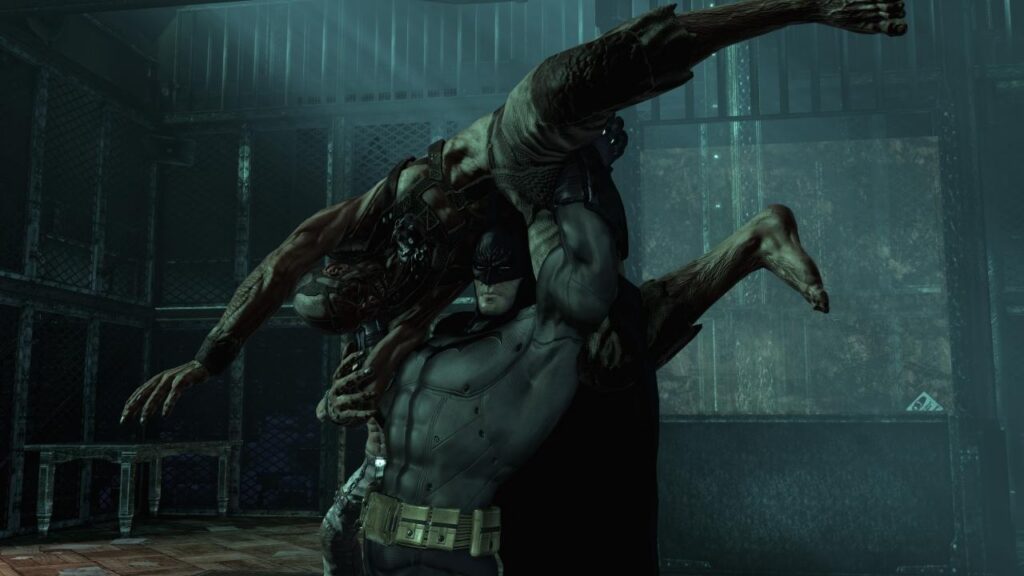
Batman: Arkham Asylum should be praised for its perfect execution of core gameplay pillars, particularly its revolutionary approach to console melee combat, setting a high standard for character-driven games.
Disco Elysium
If you want to see what writing in games can actually do, play Disco Elysium. No combat. No action sequences. Just dialogue, skill checks, and a character whose psychology is externalised into competing voices in his head. It’s audacious, literary, and mechanically tight – and it sold millions of copies. Good writing and commercial success are not opposites.
Papers, Please
Papers, Please puts you in a role that sounds crushingly dull – border control officer in a fictional totalitarian state – and turns it into one of the most morally complex games ever made. The tension isn’t between good and evil. It’s between following the rules and being human. The fact that it achieves this through stamping documents is a design miracle.
Try this: Pick one mechanic – the document inspection system, the time pressure, the penalty structure – and prototype it in your engine without the narrative. Does it still create tension? What does that tell you about where the real design work happened?
Honourable Mentions
Several other noteworthy games, including the Civilization series, Minecraft, XCOM, Gone Home, Undertale, Braid and Fez are also worth considering for their contributions to various aspects of game design, from world-building to narrative innovation.
ARE YOU INTERESTED IN BECOMING A GAME DESIGNER, ARTIST OR DEVELOPER AT METSTUDIOS?
If you want to build digital worlds for a living, MetStudios is where that starts. Don’t wait for permission – start creating now.
Explore our Games degrees →
Book a place at our next Open Day →
MetStudios is based in Brighton. Our programmes in Games, Film, and Creative Technology are built for people who want to make things.