How romance drives interactive storytelling in games
By metstudios
25 February 2026
When people think about great love stories, they often turn to novels or cinema. Yet video games have been quietly developing their own powerful romances, and they do so in a way no other media can. In a book or film, we observe love unfold. In a game, we participate in it.
For anyone interested in working in games, romance is more than a narrative theme. It’s a design challenge. It asks how mechanics, performance, writing, and player choice can work together to create emotional investment. Done well, romance becomes one of the most effective tools in interactive storytelling.
Nick Rodriguez, Dean of Games and Creative Technology at MetStudios, selects four examples that show how different kinds of romantic storytelling can shape player experience.
Final Fantasy VII – Cloud, Aerith & Tifa
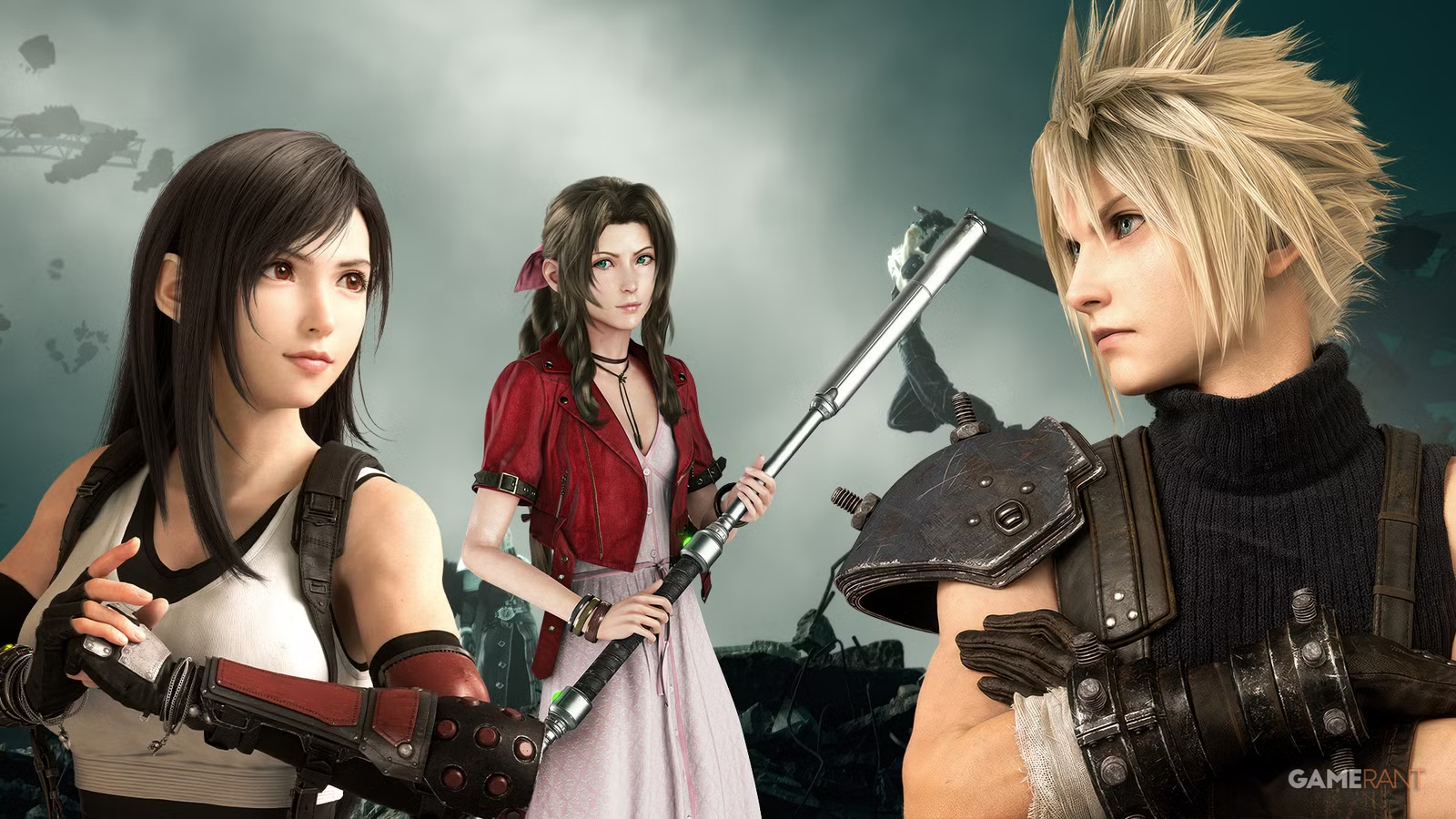
While many players point to Final Fantasy X as a classic tragic romance, Final Fantasy VII offers something more complex. In Final Fantasy X, the relationship between Tidus and Yuna follows a clear emotional arc shaped by sacrifice and limited time together.
Final Fantasy VII takes a more open approach. Cloud Strife is caught between Aerith Gainsborough and Tifa Lockhart, but the dynamic is less about choosing a ‘right’ answer and more about exploring different sides of his identity.
The central relationship is not a straightforward love triangle, but a reflection of identity and memory. The player navigates emotional uncertainty alongside the protagonist, and that ambiguity becomes part of the experience. The lesson for creators is clear: romance can deepen psychological storytelling. When players are emotionally invested, every gameplay moment carries greater weight.
Super Mario – Mario and Peach
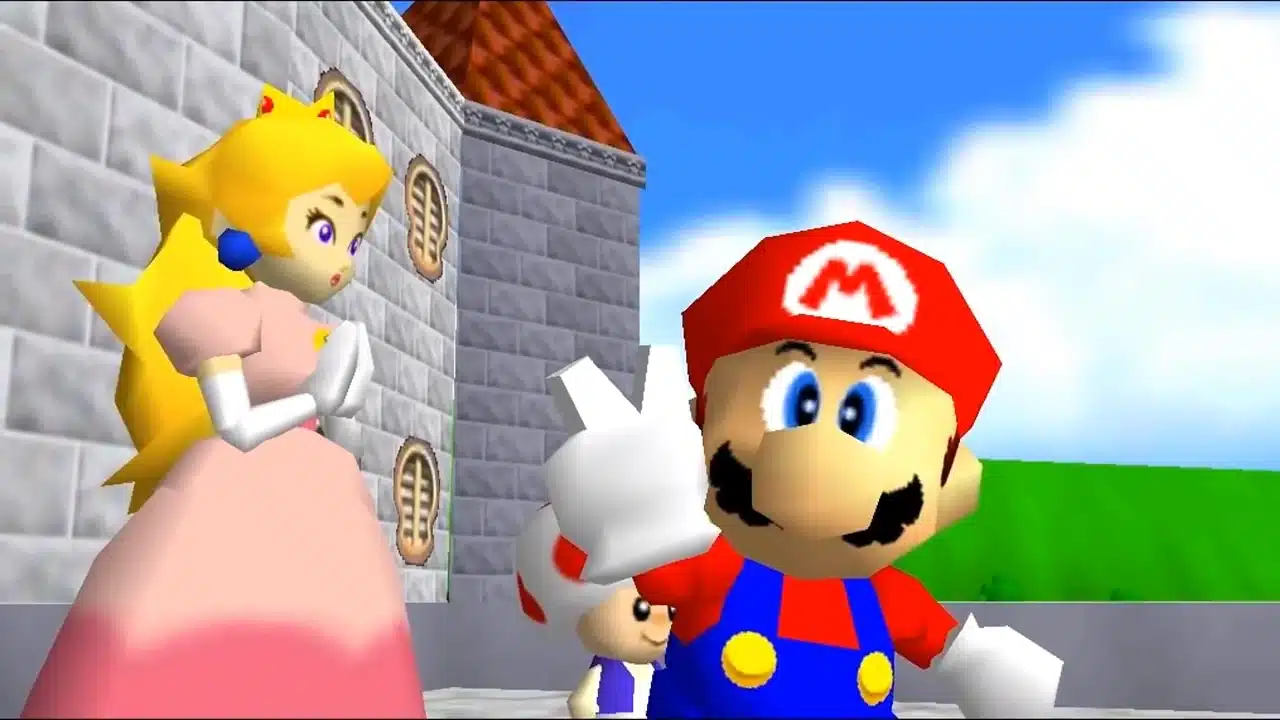
The relationship between Mario and Princess Peach in Nintendo’s Super Mario series is simple on the surface: a rescue, a reunion, and a return to safety. Yet that simplicity is deliberate.
What makes the dynamic strangely compelling is its ambiguity. Nintendo keeps Peach’s affection warm but noncommittal, A kiss on the cheek, a celebratory cake, a moment of gratitude, but never a definitive ending. In doing so, they preserve a fairytale structure. The romance between them is the engine that keeps the story moving. Throughout the series we see Bowser endlessly inserting himself into the narrative, playing the romantic rival because he understands what she represents: legitimacy, power, and the emotional centre of the Mushroom Kingdom.
For designers and animators, this shows how romance can be a motivation. Through repetition, visual storytelling, and clear character roles, the relationship provides emotional stakes. It demonstrates how even the simplest romantic framework can anchor gameplay and give it meaning.
The Witcher 3 – Geralt and Yennefer
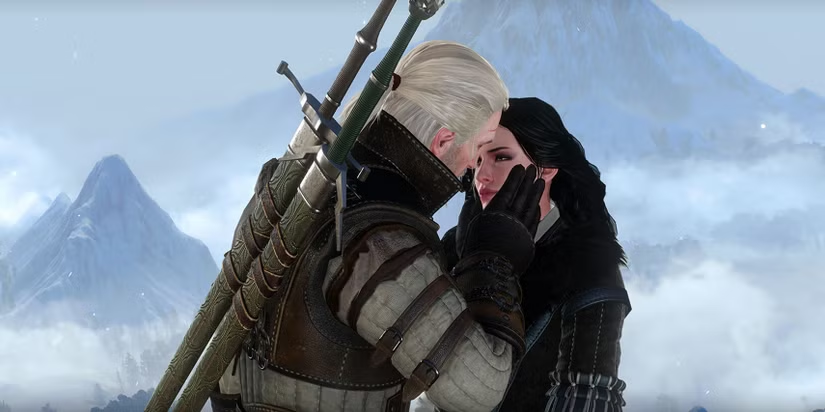
In The Witcher 3, the relationship between Geralt and Yennefer feels mature and layered. You don’t fall in love with Yennefer the way you might with a more traditional fantasy heroine. She isn’t there to soften Geralt or fix him. She stands as his equal, challenging him at every turn.
This romance is shaped by history, personality and, crucially, player choice. The player’s decisions influence how that romance unfolds, dialogue options matter.
Here, romance becomes part of the game’s interactive system. For aspiring developers, this highlights the importance of strong narrative design and developed character performance.
The Legend of Zelda: Majora’s Mask – Anju and Kafei
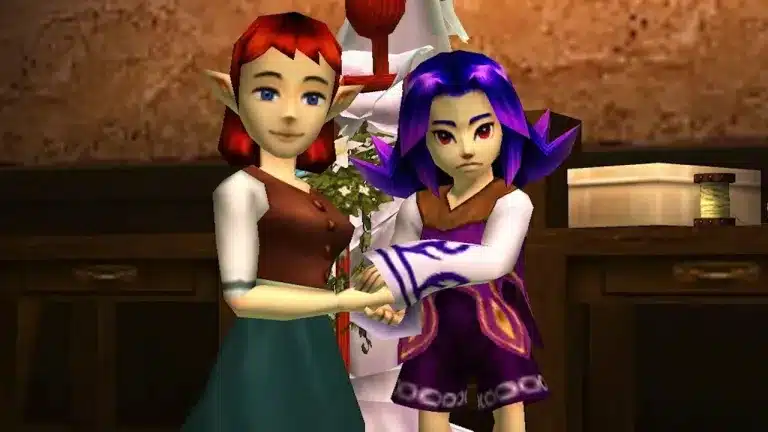
In The Legend of Zelda: Majora’s Mask, Anju and Kafei are lovers separated by circumstance and transformation. Kafei has been cursed into the body of a child and stripped of his identity. Anju is left waiting, unsure whether he has abandoned her, disappeared, or worse.
Their story unfolds through letters, missed meetings, and careful timing, all set against an unsettling backdrop: the moon is falling, and the world is days from ending.
The player becomes essential to their reunion. You deliver messages, you wait at the right place at the right time. You create the conditions for them to find each other again. The romance only resolves because you choose to intervene.
Final thoughts: Love stories you don’t just watch
What connects these examples is their interactivity. They show how romance can create stakes, shape player choice, and deepen engagement. They also highlight the collaborative nature of game development, bringing together writing, animation, design, and technical expertise to create meaningful experiences.
For those considering a future in games and animation, this is an exciting space to explore. Interactive storytelling continues to evolve, and romance remains one of its most effective tools. Games do not simply present love stories, they invite players to help create them.
Interested in becoming a game designer or games artist at MetStudios?
Sign up for one of our Open Days or apply via UCAS.
Craft the Digital Worlds of Tomorrow
MetStudios is for people who imagine new worlds and want to bring them to life. Small classes, one-to-one mentorship, and practical, hands-on projects sit at the heart of everything we do. We put wellbeing and diversity first, so you have the space and confidence to explore your creativity and create work that feels truly your own.